
The extension-cord spiderweb ends here
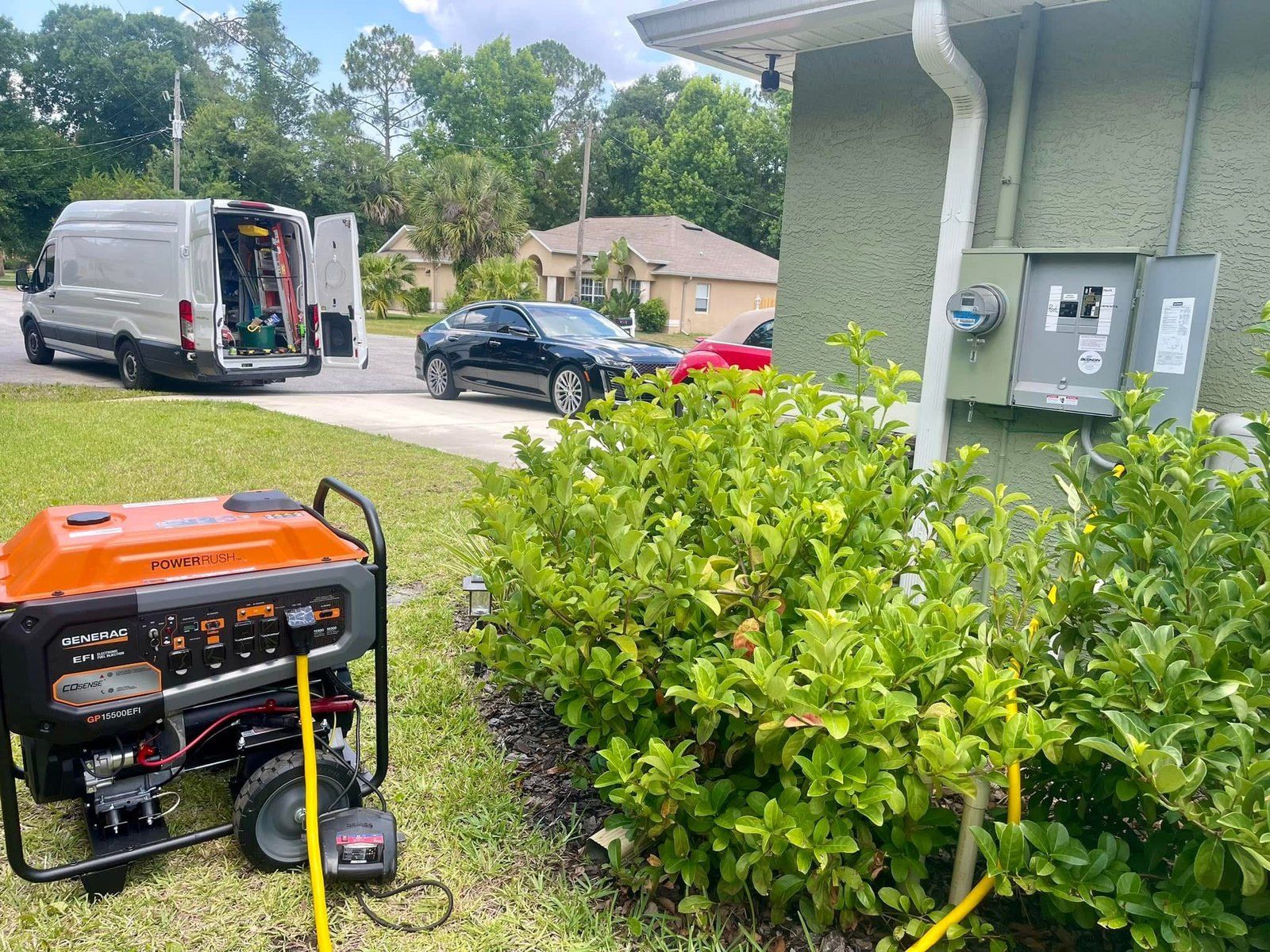
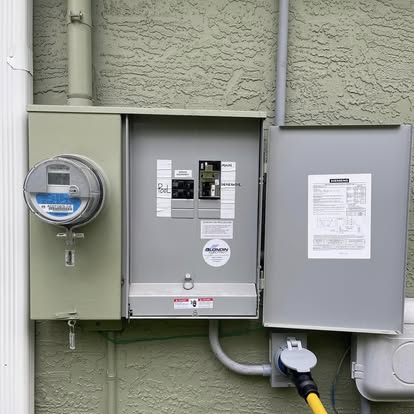
Every hurricane season we meet families running cords through windows to a generator on the patio — fridge on one cord, fan on another, everything else dark. A proper generator hookup changes that: an inlet box outside, a heavy twist-lock cord, and an interlock kit on your panel that lets your generator feed the circuits you choose — lights, fridge, well pump, the bedroom window A/C — through the house’s own wiring.
Hundreds of hookups — and yes, we can usually run your A/C
We’ve done hundreds — honestly closer to thousands — of generator interlock hookups, and that experience is the whole difference between “some lights and the fridge” and “the house basically runs.” The part most shops don’t bother with is matching the generator to your house, especially the air conditioning. Central A/C is the big hurdle on a portable generator — but by looking at your condenser’s actual startup draw, and adding a soft-start where it helps, we can usually get your A/C running off the right-sized generator. In a Florida summer that’s not a luxury; it’s the difference between staying in your home after a storm and having to leave it.
Why the interlock matters (and why FPL cares)
The interlock is a mechanical plate that makes it physically impossible to have your generator and the utility main on at the same time. That protects your equipment when grid power returns — and protects the FPL lineman working on your street from your generator backfeeding the pole. It’s the difference between a safe, code-compliant setup and a dangerous one. This is exactly the kind of work a license is for.
Honest positioning: portable-first
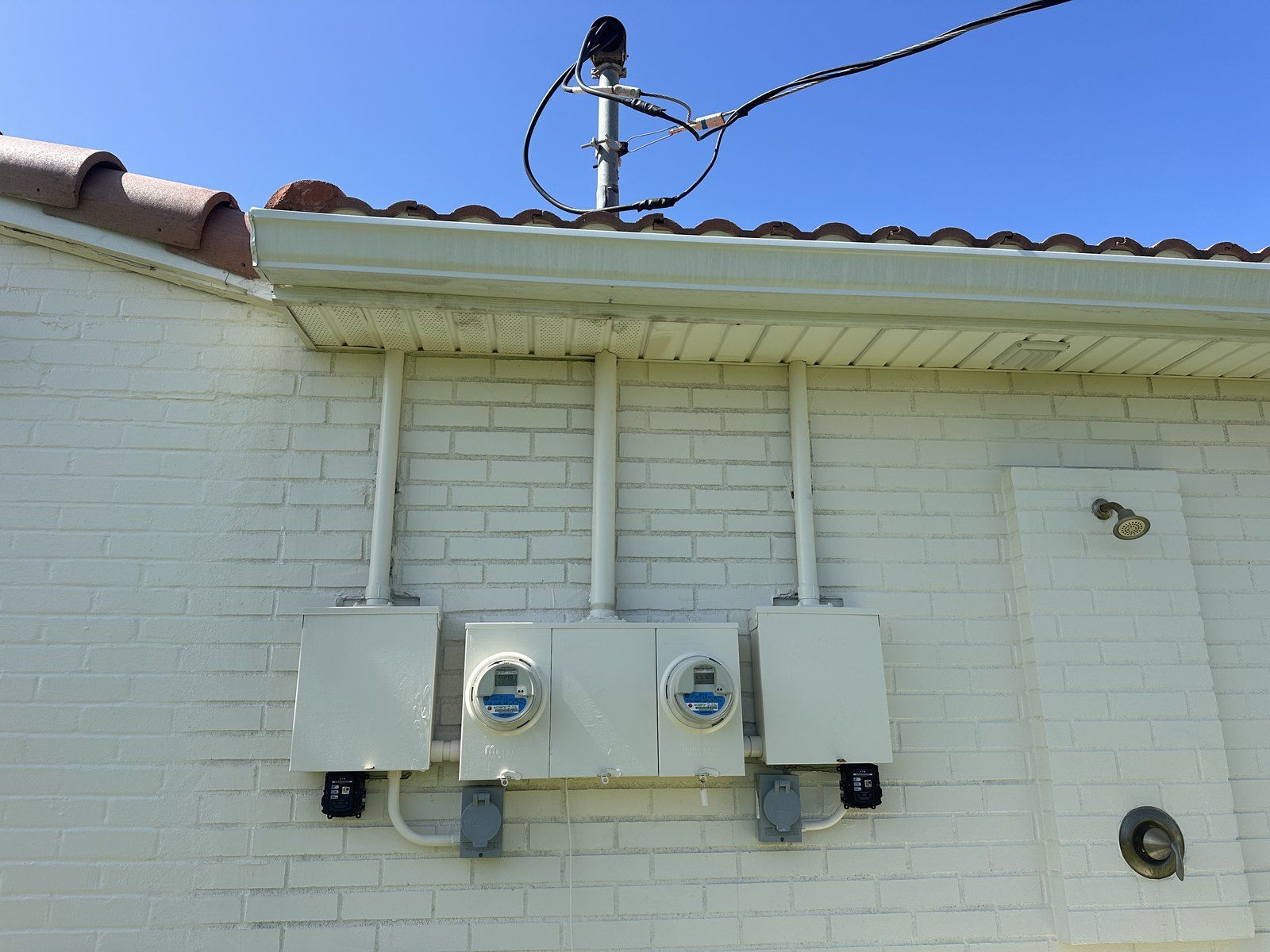
We specialize in portable generator connections — 30-amp and 50-amp inlets, interlocks, gen-ready meter mains, and whole-house surge protection to go with them. It’s the setup that makes sense for most Flagler and Volusia homes: a fraction of the cost of a standby system, and when the storm passes, the generator goes back in the garage.
We don’t just install interlocks — we stock them by the pallet
Blondin Electric was one of the first shops in the area to put interlock kits on homes, back when most electricians wouldn’t touch them. We never stopped. Every summer, right before hurricane season, we lay in around $20,000 of generator gear — interlock kits for every panel brand, breakers, inlet boxes, and twist-lock cords in every length from 15 feet all the way out to 150. And interlocks are anything but one-size-fits-all — a single brand like Siemens can have ten or twenty different kits, and only the exact right one fits your particular panel or meter-main combo. Stocking them all is a headache most shops won’t take on. We do. So when a storm is on the map and the supply houses are picked clean, we still have it on the shelf. Other electricians — and even supply houses — call us when they run short. That’s not a brag; it’s why we can get your home set up when nobody else can.
The honest truth about whole-house standby generators
Plenty of companies will happily sell you a $15,000–$20,000 whole-house standby generator. Sometimes that’s the right call — but on the barrier island and near the water, here’s what doesn’t make the brochure:
- The sticker price is just the start. Maintenance runs $700+ a year — if you can even get a tech out — and many units need proprietary codes or a factory dealer just to be serviced.
- Propane is the weak link. When a hurricane’s bearing down, you’re last in line for propane behind hospitals, schools and big businesses. A standby generator with an empty tank is a lawn ornament.
- Salt eats them alive. A standby unit has to live outside year-round, and the salt air over here corrodes them — we’ve watched them rot out within a couple of years on the beach.
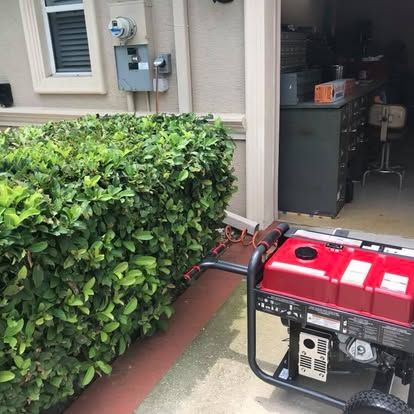
A portable-and-interlock setup sidesteps all of it: you store the generator inside — garage, shed, anywhere dry — so it isn’t rotting in the salt air, you fuel it with gas you can get anywhere, and you spend a fraction of the money. That’s why we steer most coastal homeowners this way. If a standby system truly fits your situation, we’ll say so honestly — but we won’t sell you one you don’t need.
Why the license on the truck matters
Here’s something most homeowners don’t know: in Florida, a business can operate on a rented license — a licensed electrician "qualifies" a company he doesn’t work at, for a monthly fee, and the crews who show up may have no connection to him at all. It’s legal, and it’s common. At Blondin Electric the license holder is Mike Blondin — the owner, a master electrician with 35+ years in the trade, and the guy who actually shows up at your house. You can verify any Florida electrical contractor free at MyFloridaLicense.com — look us up: EC13003641. Ask any company you hire who holds their license and whether that person will be on your job. It’s a fair question, and the answer tells you everything.
Questions homeowners ask us
Can I just plug my generator into a dryer outlet?
Please don’t — that’s the infamous “suicide cord.” It can backfeed the power lines and hurt a lineman, and it bypasses every protection in your panel. An interlock and inlet box do the same job safely, and the install is quick.
What size generator hookup do I need — 30 amp or 50 amp?
A 30A inlet runs the essentials comfortably; a 50A inlet lets a larger portable carry most of a typical house if you manage the big loads. We’ll size it to the generator you own — or tell you what to buy before you spend a dime.
How fast can this be done before a storm?
The install itself is usually a few hours. But when a named storm is on the map, everyone calls at once — the smart move is doing it in the calm season. Call us in May, thank yourself in September.
Will the generator run my central air conditioner?
Depends on the generator and the A/C. Many portables will carry a smaller unit or a soft-start-equipped system. We’ll give you a straight answer for your exact equipment — not a sales pitch.
Do you install whole-house standby generators?
Our specialty is portable hookups with interlocks — the best value for most homes here. If a standby system truly fits your situation, we’ll tell you honestly and point you the right way.
Real jobs, real photos
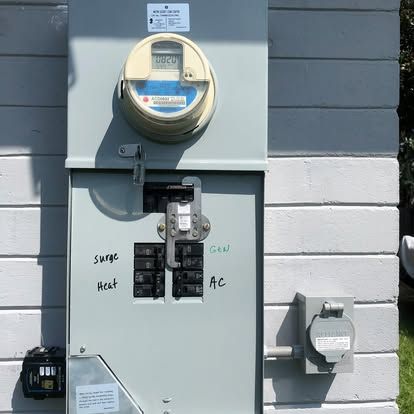
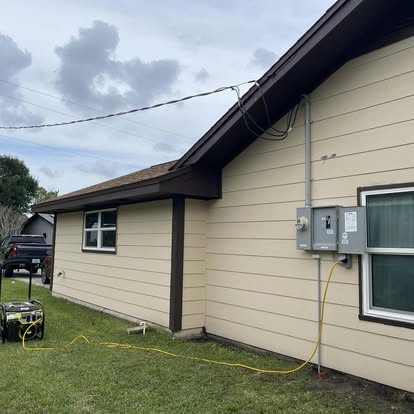
⭐ 5.0 stars on Google. Don’t take our word for it — see our Google Business profile or read & leave reviews.
Ready when you are
Licensed & insured • FL License EC13003641 • 5.0-star rated on Google • Family owned since 2007
Request Service or an Estimate (386) 214-8830Related: Surge Protection • Panel Replacement • Service & Meter Upgrades • Areas: Palm Coast • Flagler Beach • The Hammock & Marineland • Ormond Beach